
Modes of Communication in Networking (Simplex, Half Duplex & Full Duplex – CCNA Day 7)


Introduction
In networking, communication between devices can happen in different ways. These are called Modes of Communication.
Understanding these modes helps you know:
How data flows between devices
Why some connections are faster
How network performance is affected
In this guide, you will learn:
Types of communication modes
Simplex, Half Duplex, Full Duplex
Real-life examples
Network usage
What are Modes of Communication?
Modes of communication define how data is transmitted between two devices.
👉 It describes direction of data flow.
Types of Communication Modes
There are 3 main types:
Simplex
Half Duplex
Full Duplex
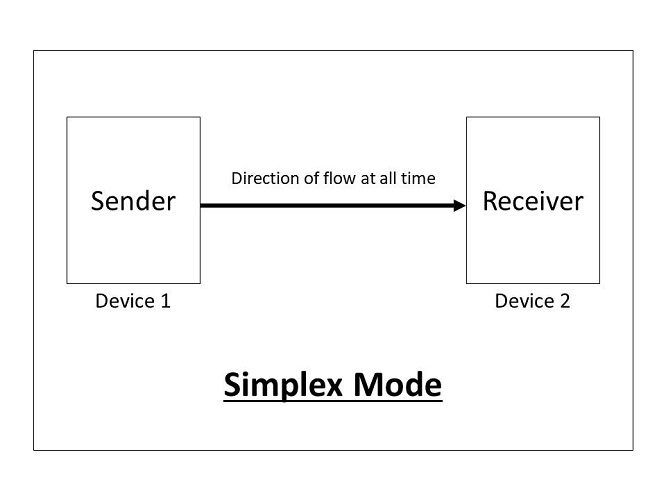
1️⃣ Simplex Communication
Definition:
Data flows in only one direction.
👉 One device sends, other only receives.
Example:
Keyboard → Computer
TV Broadcast
👉 You can only receive TV signal, cannot send back.
Network Example:
Sensor sending data to server
Key Points:
✔ One-way communication
✔ No reply possible
2️⃣ Half Duplex Communication
Definition:
Data flows in both directions, but not at the same time.
👉 One device sends, then the other sends.
Example:
Walkie-talkie
👉 You press button to speak, then release to listen.
Network Example:
Old Ethernet hubs
Key Points:
✔ Two-way communication
✔ Not simultaneous
✔ Slower than full duplex
3️⃣ Full Duplex Communication
Definition:
Data flows in both directions at the same time.
👉 Both devices can send and receive simultaneously.
Example:
Phone call
👉 Both people talk and listen at same time.
Network Example:
Modern switches
FTTH broadband
Key Points:
✔ Fast communication
✔ No waiting
✔ Best performance
Comparison Table
| Mode | Direction | Speed | Example |
|---|---|---|---|
| Simplex | One-way | Low | TV |
| Half Duplex | Two-way (one at a time) | Medium | Walkie-talkie |
| Full Duplex | Two-way (simultaneous) | High | Phone |
Real-Life Example (Home Network)
In your home:
Watching TV → Simplex
Walkie-talkie toy → Half Duplex
Internet browsing → Full Duplex
FTTH Example
In FTTH networks:
ONT ↔ Router → Full Duplex
Data upload & download happen simultaneously
👉 That’s why fiber internet is fast.
Why Communication Mode is Important
It affects:
✔ Speed
✔ Efficiency
✔ Network performance
Common Interview Question
👉 Which mode is used in modern networks?
Answer: Full Duplex
Common Mistakes
❌ Confusing half duplex with full duplex
❌ Thinking all networks are full duplex
❌ Ignoring impact on speed
Conclusion
Modes of communication define how devices exchange data.
Simplex → One-way
Half Duplex → Two-way (one at a time)
Full Duplex → Two-way (simultaneous)
Understanding this helps in:
✔ Network design
✔ Troubleshooting
✔ Performance optimization
SEO Keywords
modes of communication networking
simplex half duplex full duplex
duplex mode explained
network communication types
full duplex vs half duplex
CCNA basics communication
Suggested Blogger Tags
CCNA
Networking Basics
Communication Modes
Simplex
Half Duplex
Full Duplex
Cisco

Thanks
ReplyDelete