
How GPON Technology Works? Complete Engineer-Level Guide (2026)


Introduction
If you are working in FTTH or broadband field, you must have heard about GPON technology. GPON is the backbone of modern fiber internet services. Without GPON, FTTH networks cannot function efficiently.
In this guide, we will explain:
What is GPON?
Full form of GPON
How GPON works step-by-step
OLT, Splitter and ONT role
Bandwidth sharing concept
Advantages of GPON
Why GPON is widely used in India
Let’s understand it in simple but technical language.
What is GPON?
GPON stands for Gigabit Passive Optical Network.
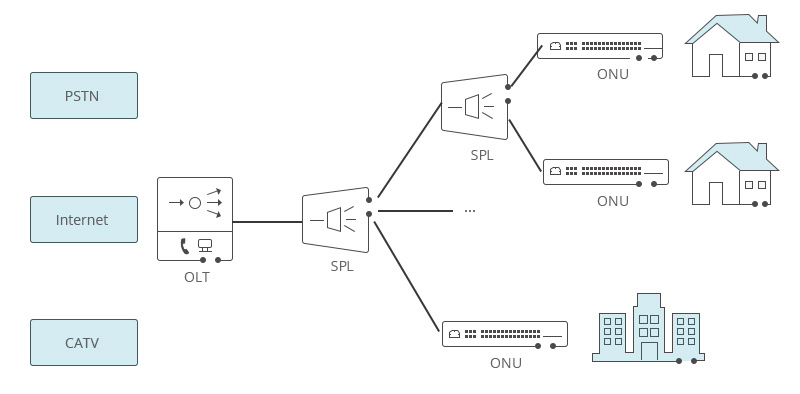
It is a point-to-multipoint fiber access technology used in FTTH networks to deliver high-speed internet from ISP to multiple customers using a single fiber line.
GPON is standardized by International Telecommunication Union (ITU-T G.984 standard).
Basic GPON Architecture
GPON network mainly has 3 major components:
1️⃣ OLT (Optical Line Terminal)
Installed at ISP central office.
Functions:
Controls the entire PON network
Assigns bandwidth to users
Converts electrical signals to optical signals
Manages authentication and configuration
One OLT port can serve multiple customers (typically 1:32 or 1:64 split).
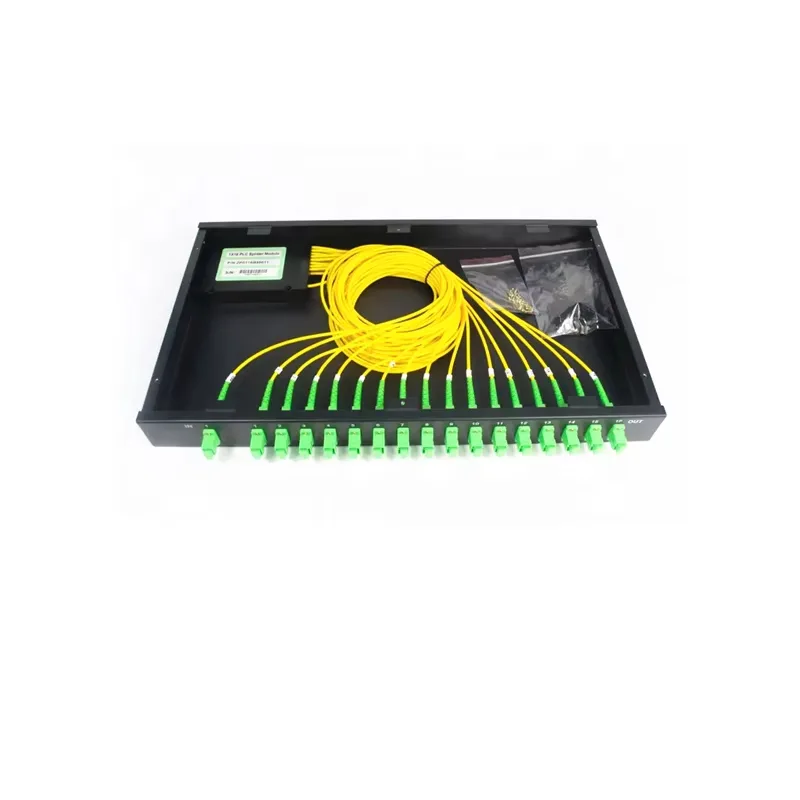
2️⃣ Optical Splitter (Passive Device)
Installed in the field (FDT/FAT).
Functions:
Splits one fiber signal into multiple outputs
Does not require power
Common ratios: 1:8, 1:16, 1:32
Because it is passive, maintenance cost is low.
3️⃣ ONT (Optical Network Terminal)
Installed at customer premises.
Functions:
Converts optical signals to electrical signals
Provides LAN and WiFi output
Shows LOS/PON status
Authenticates with OLT
Each ONT has a unique serial number registered in the OLT.
How GPON Works – Step-by-Step Process
Step 1: Data Transmission from ISP
Internet data reaches the OLT from ISP core network.
Step 2: Optical Signal Conversion
OLT converts electrical data into light signals (1490 nm downstream).
Step 3: Signal Splitting
Optical splitter divides the signal among multiple customers.
Step 4: ONT Reception
ONT receives the light signal and converts it into usable internet.
Step 5: Upstream Communication
Customer data travels back using 1310 nm wavelength.
Bandwidth Sharing Concept in GPON
GPON uses Time Division Multiple Access (TDMA).
Downstream speed: Up to 2.5 Gbps
Upstream speed: Up to 1.25 Gbps
If 32 users share one PON port:
Bandwidth is dynamically allocated based on usage.
Heavy user = more bandwidth
Idle user = less bandwidth
This is called Dynamic Bandwidth Allocation (DBA).
GPON Technical Specifications
| Feature | Value |
|---|---|
| Downstream Speed | 2.5 Gbps |
| Upstream Speed | 1.25 Gbps |
| Max Distance | 20 km |
| Split Ratio | 1:64 |
| Wavelength | 1490nm (Down), 1310nm (Up) |
Why GPON is Popular in India?
India is rapidly expanding fiber networks under projects like BharatNet.
Reasons GPON is preferred:
Cost-effective deployment
Passive network reduces power usage
Supports large number of users
High scalability
Ideal for both urban & rural areas
Most Indian ISPs use GPON for FTTH services.
Common GPON Field Issues
As a fiber engineer, you may face:
High optical power (-28 dBm or lower)
LOS red light
Splitter loss issue
Patch cord damage
ONT not registering
PON port congestion
These are common troubleshooting areas in daily operations.
Advantages of GPON
✅ High-speed internet
✅ Low maintenance cost
✅ Energy efficient
✅ Scalable architecture
✅ Supports IPTV, VoIP, Internet together
Future of GPON Technology
GPON is evolving into:
XG-PON (10 Gbps)
XGS-PON (10 Gbps symmetrical)
In coming years, India will slowly upgrade from GPON to next-generation PON for higher bandwidth demands.
Conclusion
GPON technology is the heart of FTTH broadband networks. It allows one fiber to serve multiple homes efficiently and cost-effectively.
If you are a broadband engineer or planning to start FTTH services, understanding GPON architecture is essential for smooth network operations.
As fiber penetration increases in India, GPON will continue to dominate the broadband industry.
SEO Keywords
GPON full form
How GPON works
OLT ONT splitter explanation
GPON architecture diagram
FTTH GPON technology
GPON bandwidth sharing

0 Response to "How GPON Technology Works? Complete Engineer-Level Guide (2026)"
Post a Comment