
What is FTTH? Complete Beginner Guide (2026)


Introduction
In today’s digital world, fast and stable internet is no longer a luxury — it is a necessity. From online meetings and OTT streaming to gaming and cloud services, everything depends on high-speed connectivity. One of the most advanced broadband technologies available today is FTTH.
In this complete beginner guide, you will learn:
Full form of FTTH
How FTTH works
Difference between FTTH and DSL
Advantages of FTTH
Future scope of FTTH in India
Let’s get started.
Full Form of FTTH
FTTH stands for Fiber To The Home.
It is a broadband technology that uses optical fiber cable to deliver high-speed internet directly from the service provider to the customer’s home.
Unlike traditional copper cables, fiber cables transmit data using light signals, which makes them much faster and more reliable.
How FTTH Works
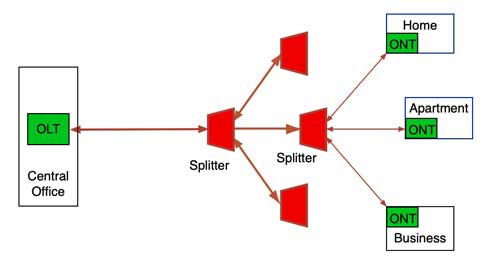
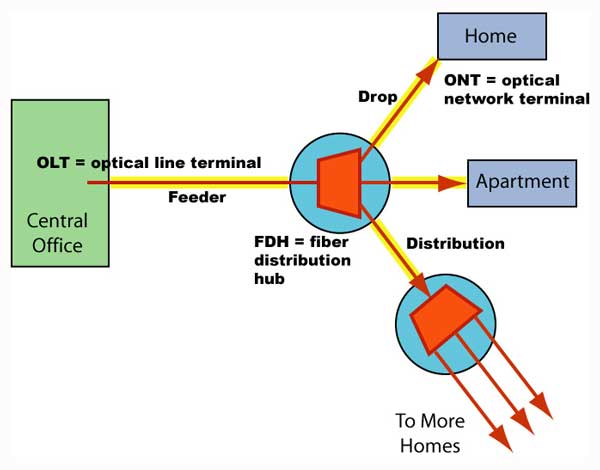
FTTH works using fiber optic infrastructure and a technology called Gigabit Passive Optical Network (GPON).
Here is a simple explanation of the process:
1️⃣ OLT (Optical Line Terminal)
Installed at the service provider’s central office. It sends internet data through fiber cables.
2️⃣ Optical Splitter
A passive device that splits one fiber signal into multiple connections for different homes.
3️⃣ Fiber Distribution Network
Fiber cables run through underground ducts or poles to reach residential areas.
4️⃣ ONT (Optical Network Terminal)
Installed at the customer’s home. It converts light signals into electrical signals for WiFi routers and devices.
Because fiber uses light instead of electricity, it provides extremely high speed and low latency.
Difference Between FTTH and DSL
| Feature | FTTH | DSL |
|---|---|---|
| Cable Type | Optical Fiber | Copper Telephone Line |
| Speed | Up to 1 Gbps or more | Usually up to 24 Mbps |
| Stability | Very High | Medium |
| Signal Loss | Very Low | High over distance |
| Suitable For | Streaming, Gaming, Business | Basic Browsing |
DSL (Digital Subscriber Line) uses copper cables, which are slower and affected by distance. FTTH provides consistent speed even over long distances.
Advantages of FTTH
✅ 1. Ultra-High Speed
FTTH can provide 100 Mbps to 1 Gbps easily.
✅ 2. Low Latency
Perfect for online gaming and video conferencing.
✅ 3. Stable Connection
Less affected by weather or electrical interference.
✅ 4. Future-Proof Technology
Fiber infrastructure can support future bandwidth upgrades.
✅ 5. Better Streaming Quality
Smooth 4K and 8K streaming without buffering.
Future Scope of FTTH in India (2026 and Beyond)
India is rapidly expanding fiber connectivity under government and private initiatives. Programs like BharatNet aim to provide broadband to rural areas.
Major telecom companies are investing heavily in fiber networks across cities and villages.
In the coming years:
More smart homes will use FTTH.
Remote work will increase demand.
Cloud gaming and AI applications will require higher bandwidth.
Rural India will see major digital growth.
FTTH is expected to become the primary broadband technology across India.
Who Should Choose FTTH?
FTTH is best for:
Work from home professionals
Students attending online classes
Online gamers
CCTV and surveillance systems
Small businesses
Content creators
If you need fast, stable, and long-term internet connectivity, FTTH is the right choice.
Conclusion
FTTH (Fiber To The Home) is the most advanced broadband technology available today. It offers high speed, low latency, and unmatched reliability compared to traditional DSL connections.
As India moves toward a fully digital economy, FTTH will play a major role in connecting homes, businesses, and rural areas with ultra-fast internet.
If you are still using DSL or copper broadband, 2026 is the right time to upgrade to FTTH.
SEO Keywords
FTTH full form
What is FTTH in broadband
FTTH vs DSL difference
How FTTH works
GPON technology explained
Fiber internet in India

0 Response to "What is FTTH? Complete Beginner Guide (2026)"
Post a Comment