
TCP/IP Model Explained (Networking Basics Made Easy – CCNA Day 3)
Introduction
After learning the OSI Model, the next important concept is the TCP/IP Model.
The TCP/IP Model is the real-world networking model used on the internet.
In this guide, you will learn:
What is TCP/IP Model
4 layers explained
Difference between OSI & TCP/IP
TCP vs UDP
Real-life example
What is TCP/IP Model?
TCP/IP stands for:
👉 Transmission Control Protocol / Internet Protocol
It is the actual protocol suite used for internet communication.
Unlike the OSI model (theoretical), TCP/IP is practical and widely used.
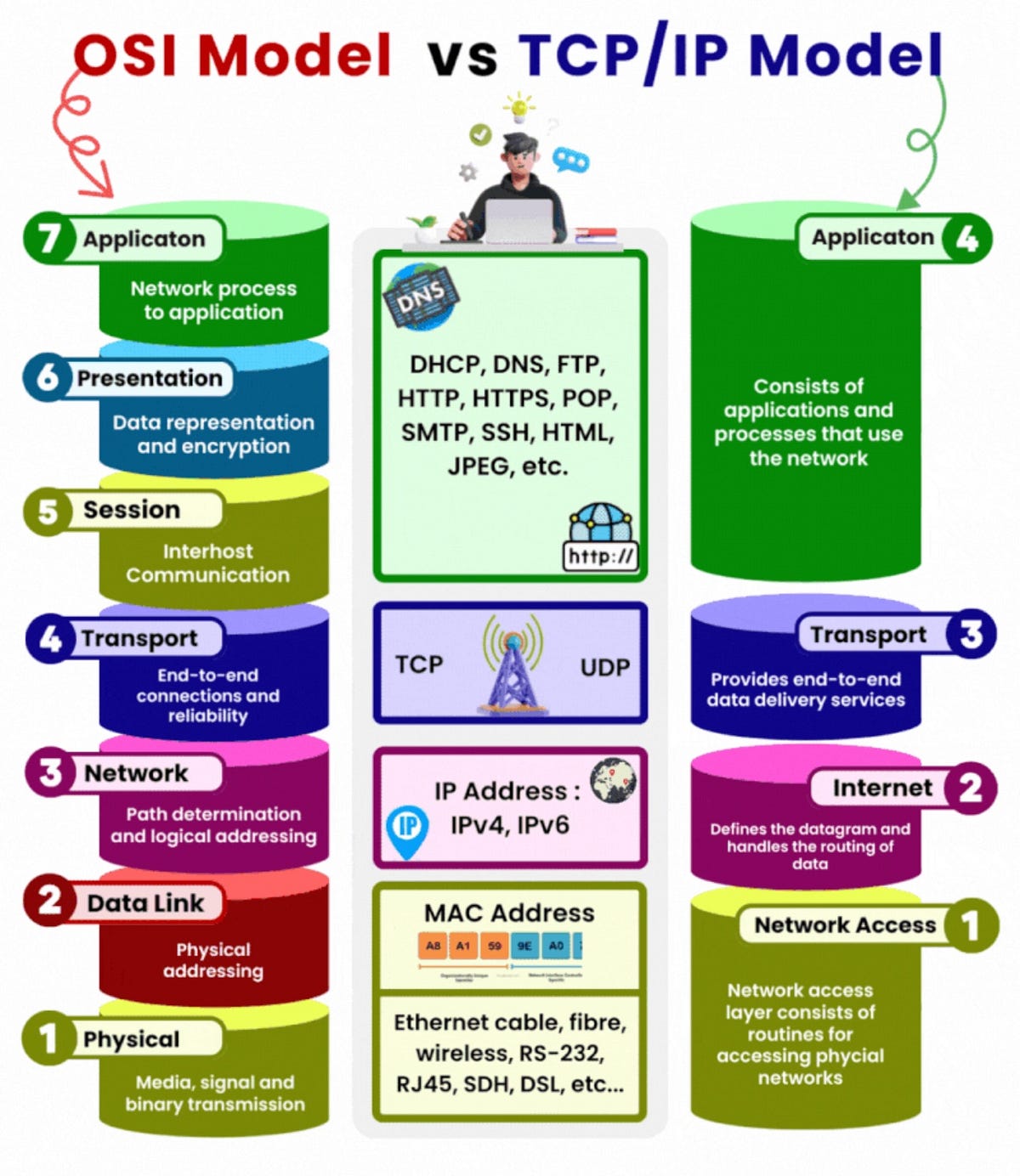
4 Layers of TCP/IP Model
Application Layer
Transport Layer
Internet Layer
Network Access Layer
Easy Memory Trick
👉 "All Techies In Network"
A → Application
T → Transport
I → Internet
N → Network Access
Layer-by-Layer Explanation
4️⃣ Application Layer
Provides services to users
Combines OSI layers (Application + Presentation + Session)
Examples:
HTTP (Web browsing)
FTP (File transfer)
SMTP (Email)
3️⃣ Transport Layer
Responsible for data delivery
Error checking
Flow control
Protocols:
TCP (Reliable)
UDP (Fast, no guarantee)
2️⃣ Internet Layer
Handles IP addressing
Routing of packets
Protocol:
IP (IPv4 / IPv6)
1️⃣ Network Access Layer
Physical transmission of data
Works with hardware
Examples:
Ethernet
WiFi
Fiber
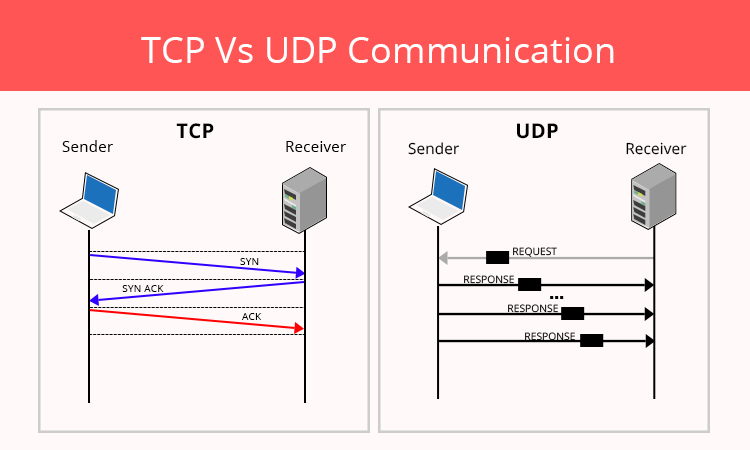
TCP vs UDP (Important Topic)
| Feature | TCP | UDP |
|---|---|---|
| Reliability | High | Low |
| Speed | Slower | Faster |
| Connection | Connection-oriented | Connectionless |
| Use | Browsing, Email | Streaming, Gaming |
👉 TCP ensures delivery
👉 UDP focuses on speed
TCP/IP vs OSI Model
| OSI Model | TCP/IP Model |
|---|---|
| 7 Layers | 4 Layers |
| Theoretical | Practical |
| Complex | Simple |
Mapping:
OSI (Application + Presentation + Session) → TCP/IP Application
OSI Transport → TCP/IP Transport
OSI Network → TCP/IP Internet
OSI Data Link + Physical → Network Access
Real-Life Example
Opening a website:
Application → Request sent (HTTP)
Transport → Data divided (TCP)
Internet → IP address routing
Network Access → Data transmitted via fiber/WiFi
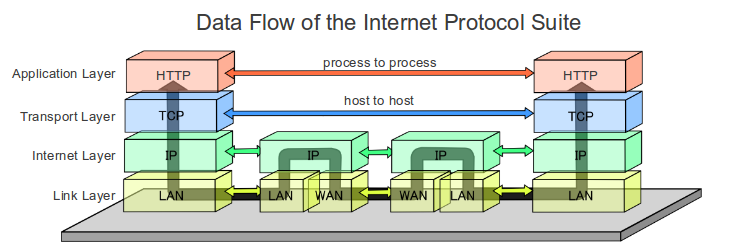
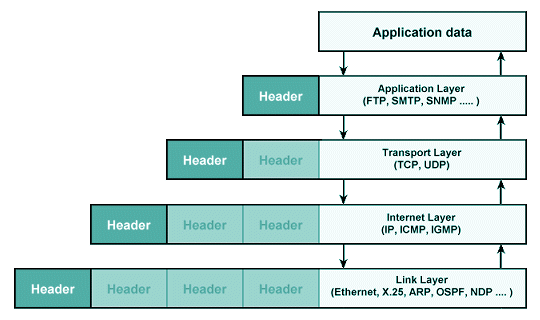
Data Flow in TCP/IP
Sender → Packet Creation → Transmission → Receiver
Each layer adds and removes information during transfer.
Why TCP/IP Model is Important
It helps in:
✔ Understanding internet communication
✔ Learning real networking
✔ Troubleshooting network issues
✔ Building CCNA foundation
Field Example (FTTH)
In FTTH:
ONT uses IP to connect
Router uses TCP/IP
Data flows using TCP/IP protocols
Everything works on this model.
Conclusion
The TCP/IP Model is the backbone of the internet.
By understanding its 4 layers, you can:
✔ Understand real-world networking
✔ Learn how data travels
✔ Build strong CCNA knowledge
This is one of the most practical topics in networking.
SEO Keywords
TCP IP model explained
difference between TCP and UDP
TCP IP vs OSI model
networking basics TCP IP
internet protocol suite
CCNA TCP IP
Suggested Blogger Tags
CCNA
TCP IP Model
Networking Basics
TCP UDP
Internet Protocol
Cisco
Network Engineering

0 Response to "TCP/IP Model Explained (Networking Basics Made Easy – CCNA Day 3)"
Post a Comment